
Fence planning
How to Fence a Sloped Yard
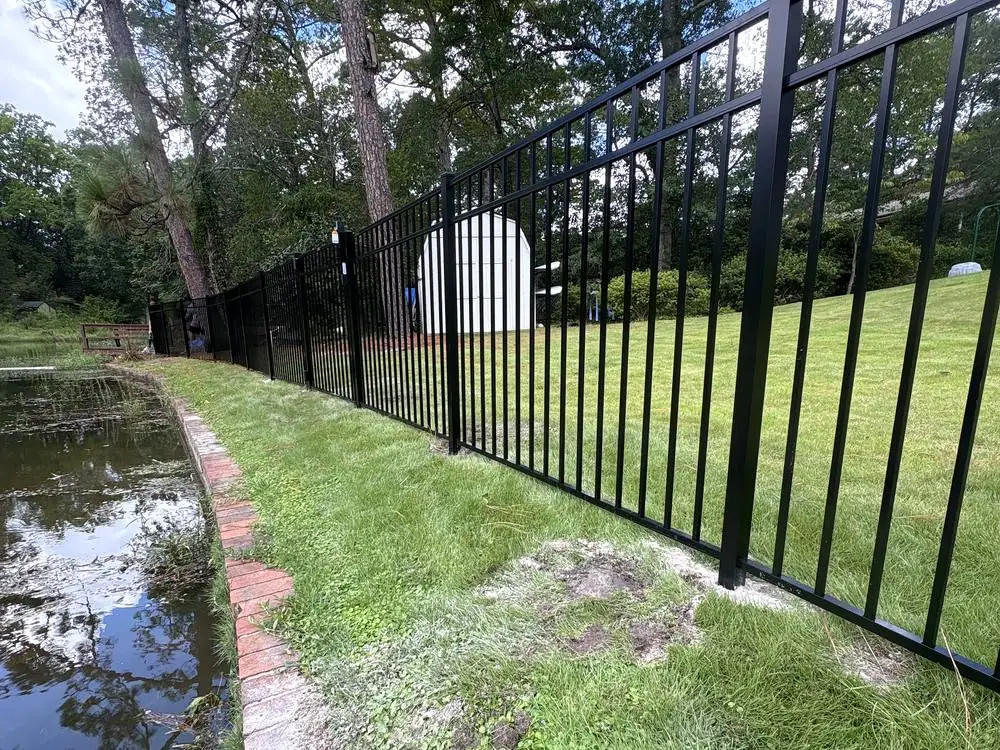
A hill does not rule out a fence. It changes how the fence gets built. Plenty of yards in Lexington, Chapin, Irmo and Blythewood have some grade to them, and we fence them every week. Here is how the options work, so you know what to ask for.
Two ways to handle a slope
A fence can step with the hill or follow it. Stepped means each section stays level and the next one sits a little higher or lower, like a staircase going down the yard. Following the ground means the panels tilt to match the slope, so the fence runs in one continuous line.
Which one fits depends on the material, how steep the ground is and what the fence needs to do.
Stepped fences
Wood and vinyl privacy fences are usually built in level steps. Each section keeps a clean, square top line, which is why this approach looks orderly on a privacy fence. The tradeoff is the opening under the lower end of each section, where the ground falls away. That gap is a triangle, and it is wider the steeper the hill.
For a decorative fence the gap does not matter. For a yard with small dogs, it can matter a lot. Tell us if the fence has to hold a pet, and we will plan how to close the gap in a way that does not trap water or look patched.
Fences that follow the ground
Aluminum is the natural fit for a hill. Rake bottom panels follow a gentle slope, where flush bottom panels suit flat ground. The result is an open fence with one steady line and very little gap underneath. Panels can only tilt so far, so a steeper hill is a conversation, and we plan it in person before we quote it.

Chain link follows uneven ground well too, because the fabric is flexible. It is a practical choice for larger yards and pet enclosures. If a dog digs, we can add a barrier along the bottom.
Gates on a hill
A gate is the part of a fence that moves, and a hill makes it harder. A gate that swings fine on a flat driveway can drag on the ground when the grade rises under it. The hinge placement, the way the gate opens and the clearance all have to be planned.
We hang gates on slopes with hinges that let the gate swing up the hill without digging out the ground. One of our jobs was a ten foot double gate across a driveway that rose along the opening, and it swings clean. Wide or heavy gates also hang on steel pipe posts so they do not sag, which matters more on uneven ground.
If the driveway tilts where the gate goes, show us the spot and we will plan the hinges for it.
Which material fits which hill
No single material is right for every slope. Wood gives you the most room to shape a privacy fence to your yard, and it steps cleanly. Vinyl gives a clean finish with less upkeep, and some styles step better than others. Aluminum is the one to look at when you want a see through fence that rides the ground. Chain link is the practical pick for big yards and pet runs. We would rather talk through your actual hill than choose a material from a photo.
Water runs downhill
A fence on a slope sits in the path of rain. A fence should not dam the water or leave a low spot that stays wet. If you know where water collects after a heavy rain, tell us at the walk. It affects where posts go and how the bottom of the fence meets the ground.
Steep ground takes more planning
A gentle slope may need only a small adjustment. A steep yard with several changes in grade takes more time, more material and more thought. We do not guess at that from a photo. We walk the yard and quote what is there, so the proposal reflects the real ground and not a flat lot.
What to tell us at the walk
Where you want privacy, where the dog goes, where you want the gates and where the water sits. Mention any HOA rules on height or style. The homeowner pulls any permit, so if your town wants one, tell us early and we will plan the schedule around it.
Ready to plan it
Take a look at aluminum fences and custom gates, or send us the form. You can also call or text 803-609-9760.